Safety and regulations for water sports in Tunisia
What regulates a water sports base in Tunisia, and why it matters to you.
A water sports base does not simply open
In Tunisia, running a recreational water sports base requires an authorisation issued at governorate level and renewed every season. The application must establish, with supporting documents, how many staff are employed and what they are qualified in, an inventory of safety and rescue equipment, the vessels' paperwork, and a plan of the site both on the beach and on the water.
That file is submitted before the end of March, and an on-site inspection precedes the operating decision. In other words: a base welcoming the public in July was inspected in spring.
The four requirements that actually matter
- Public liability insurance. It is required in the application. A base that cannot produce its policy is not compliant. That is the first question to ask, wherever you book.
- Qualified first aiders. The authorisation requires staff holding a first aid certificate.
- Qualified lifeguards. Distinct from first aiders, they must also be certified and present on the base.
- An approved marking plan. Buoys, signage, access lanes and zones reserved for powered craft are positioned according to a filed plan. That is what physically separates swimmers from jet skis, and why you will be asked to stay inside the marked area, even when the sea looks empty.
Do you need a licence to ride a jet ski?
This is the most common question, and we are not going to answer it with a slogan. On an authorised base, the craft belongs to the base, it is used inside a declared marked zone, and it is operated under the supervision of base staff: that framework is what makes the activity accessible without prior training.
What we will not do is state categorically how Tunisian recreational boating licences work without being able to cite the text that establishes it. If your situation is unusual (riding outside the zone, unsupervised hire, your own craft), the only reliable answer comes from the maritime authority, not from a commercial page.
On board, for boat trips
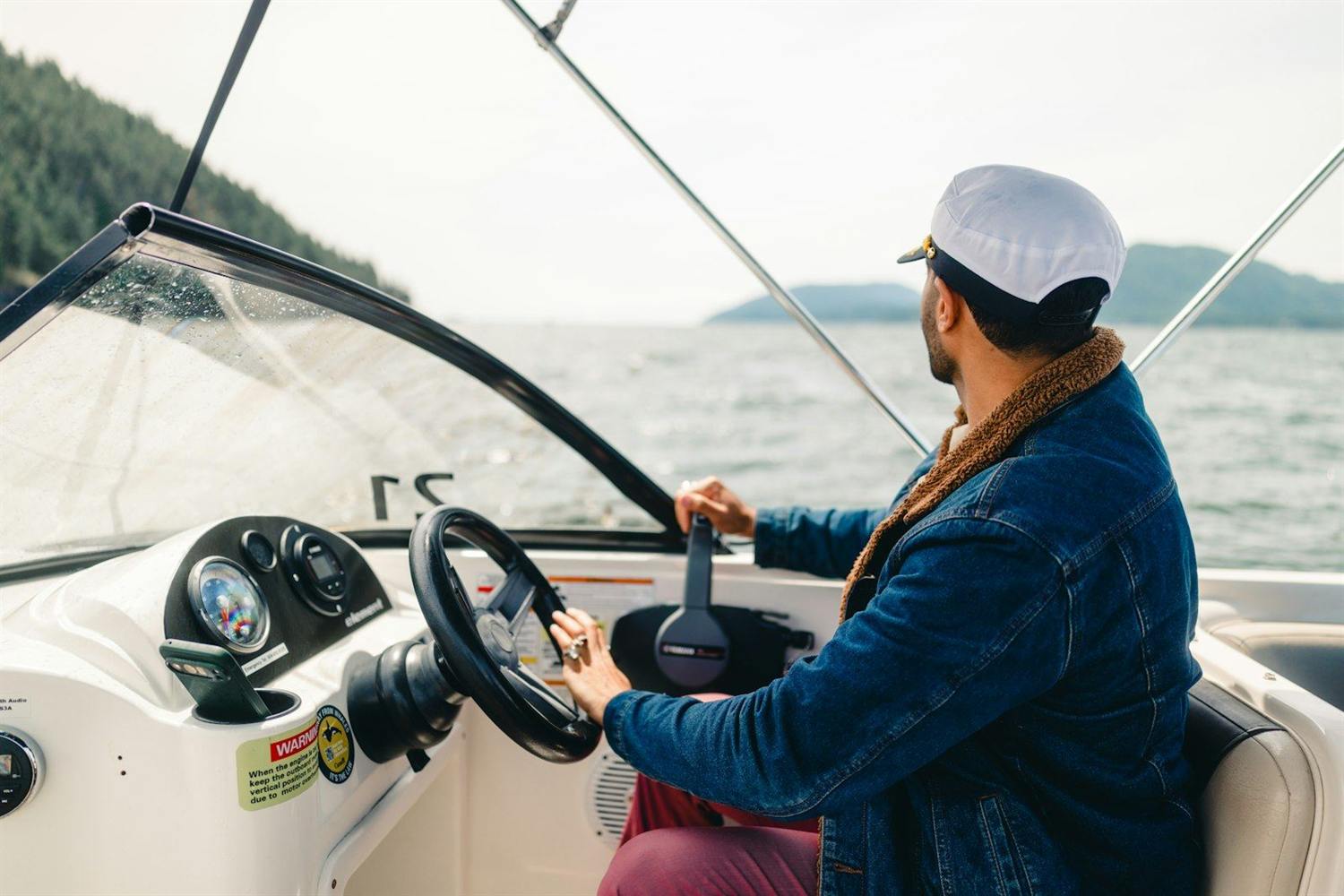
The boat is insured, inspected and equipped beyond the regulatory minimum: adult and child life jackets, liferaft, VHF, first aid kit. The skipper holds the required certificates.
And the rule with no exception: when the sea is bad, we do not go out. Even if it is your only possible date, even if the group insists. That is exactly why the weather guarantee exists: it is the other side of a refusal.
Public sources for the regulatory framework: the official procedure for authorising a recreational marine base published by a Tunisian governorate, the Office de la Marine Marchande et des Ports (OMMP), and the Merchant Shipping Code. This page describes the general framework; the texts in force prevail.
A question this page doesn't answer?
Ask us directly. We answer with what we know, and we say so when we don't know.